
SEO & analytics
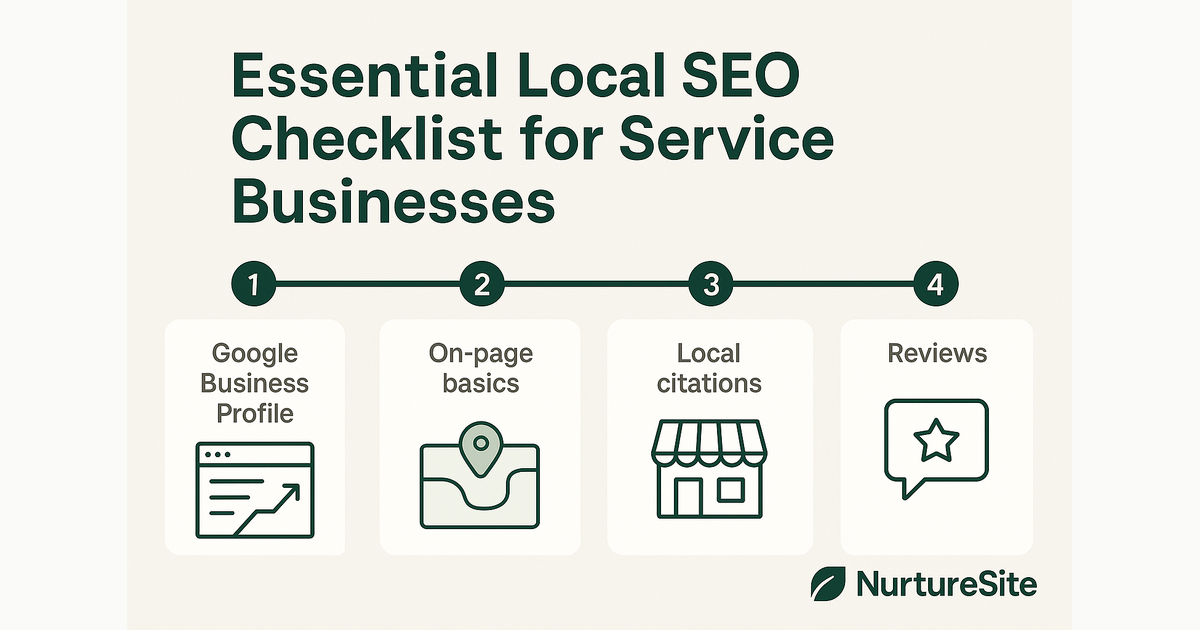
Essential Local SEO Checklist for Service Businesses
Follow this essential local SEO checklist to improve visibility, attract more leads, and grow your local service business online.
By Alexander Herold · July 9, 2026 · 6 min read
Understanding Local SEO
Local SEO is crucial for service businesses aiming to attract customers in their geographical area. Unlike traditional SEO, which focuses on a broader audience, local SEO targets potential clients who are searching for services nearby — people who are ready to book, call, or visit.
This checklist walks you through the essential elements to optimize your website and online presence for local searches, from your Google Business Profile to your on-site content and lead capture setup.
1. Optimize Your Google Business Profile
Your Google Business Profile (formerly Google My Business) is often the first impression potential customers will have of your business. Here's how to optimize it:
- Claim and verify your listing: Ensure you have full control over your business information before anything else.
- Complete all fields: Fill out your business name, address, phone number, website URL, and business hours accurately.
- Choose the right categories: Select primary and secondary categories that accurately represent your services.
- Add photos regularly: Include high-quality images of your work, team, or location. Fresh photos signal an active business.
- Encourage reviews: Ask satisfied customers to leave honest reviews. A steady stream of recent reviews improves both trust and local ranking.
- Post updates: Use the Posts feature to share offers, news, or seasonal promotions — this keeps your profile active in Google's eyes.
For more on getting your site connected and verified, see our guide on getting started with NurtureSite.
2. Keep Your NAP Consistent Everywhere
NAP stands for Name, Address, and Phone number. Consistency across every online mention of your business — your website, Google Business Profile, Yelp, local directories, and social profiles — is a foundational local SEO signal.
- Audit your existing listings: Search your business name and check that the NAP matches everywhere it appears.
- Fix mismatches promptly: Even small differences ("St" vs "Street", old phone numbers) can dilute your local authority.
- Use a single canonical address format: Decide on one format and stick to it across all platforms.
Inconsistent NAP data is one of the most common and most overlooked local SEO problems for service businesses. Getting it right costs nothing but a bit of time.
3. Optimize Your Website for Local Keywords
Identifying and using local keywords is vital for ranking in local search results. Here's how:
- Keyword research: Use tools like Google Search Console to find the queries already bringing people to your site, then build on them.
- On-page optimization: Include local keywords in your page titles, H1 headings, meta descriptions, and naturally throughout your body copy.
- Create location-specific pages: If you serve multiple towns or neighborhoods, create a dedicated page for each area with unique, useful content — not just a copy-paste with the city name swapped.
- Write a local blog: Publishing helpful content about your trade and your service area builds topical authority over time. See GSC-driven blog content for service businesses for a practical approach.
For a broader look at how your website structure supports local rankings, read Local SEO for service businesses: the website checklist.
4. Make Sure Your Website Is Mobile-Friendly
The majority of local searches happen on mobile devices. A slow or hard-to-navigate site loses leads before they ever contact you.
- Responsive design: Your website should adapt cleanly to any screen size without horizontal scrolling or broken layouts.
- Fast loading times: Compress images, remove unused scripts, and use a reliable host. Google's Core Web Vitals are a direct ranking factor.
- Tap-friendly contact options: Make your phone number a clickable
tel:link and keep your contact form visible above the fold on mobile. - Clear calls to action: Every page should make it obvious what the visitor should do next — call, book, or fill out a form.
NurtureSite builds mobile-optimized pages by default, so you're not starting from scratch on any of this.
5. Capture Leads Directly on Your Website
Ranking well only matters if your website converts visitors into enquiries. Local SEO and lead capture go hand in hand.
- Contact forms on every key page: Don't make visitors hunt for a way to reach you. A short form — name, phone, and what they need — is enough.
- Online booking: If your service is bookable, let visitors schedule directly from your site. This removes friction and captures leads even outside business hours. See Why your service business needs online booking on its own website for more.
- Leads in one place: With NurtureSite, every form submission and booking lands in your dashboard — no chasing emails across inboxes. Your built-in lead pipeline includes scoring, tasks, and follow-up automations. See /docs/site-crm for details.
6. Leverage Local Backlinks
Building local backlinks can significantly boost your local SEO authority:
- Engage with local businesses: Partner with complementary local businesses for mutual mentions or links.
- Sponsor local events: Get backlinks from event websites when you sponsor or participate in community activities.
- Join local directories: List your business in local online directories, chambers of commerce, and trade associations.
- Get featured in local press: A mention in a local news outlet or community blog carries real SEO weight.
7. Use Structured Data Markup
Structured data helps search engines understand exactly what your business does and where you operate:
- LocalBusiness schema: Implement local business schema markup on your homepage and contact page to give Google structured information about your name, address, phone, hours, and service area.
- Rich snippets: Proper schema can enhance your search listings with star ratings, business hours, and other details that improve click-through rates.
8. Monitor Your Local SEO Performance
Regularly tracking your performance is the only way to know what's working and what needs attention:
- Google Search Console: Monitor impressions, clicks, and average position for your target queries. Identify pages that are ranking on page two and optimize them first.
- Google Analytics: Track traffic sources, landing pages, and user behavior to understand how visitors find and use your site.
- Local rank tracking: Use a rank tracking tool to monitor your positions for key local keywords over time.
- NurtureSite analytics dashboard: Your built-in analytics give you a privacy-friendly view of traffic and lead activity without relying on third-party cookies. See the analytics dashboard overview for a walkthrough.
Putting It All Together
Optimizing for local SEO is not a one-time task — it's an ongoing process of small, consistent improvements. By working through this checklist, you can steadily improve your website's visibility, attract more qualified leads, and grow your local service business.
A well-optimized website doesn't just rank better. It also gives visitors a clearer reason to choose you, a faster path to contact you, and a better experience that turns first-time visitors into repeat customers.
If you're starting from scratch or want to replace a site that isn't pulling its weight, NurtureSite builds your core pages, blog, analytics, and lead capture together — so everything works as a system from day one. See pricing and plans or start building for free and preview your site before you pay a cent.
Further reading:
- Local SEO for service businesses: the website checklist
- Creating an AI-Built Website for Your Local Service Business
- Website lead capture: 8 practices that actually fill your inbox
Related reading
- NurtureSite vs Nurture: Understanding the Key Differences — Explore the differences between NurtureSite and other brands to ensure your local service business has the right website solution.
- How to Rank a Plumber in Google Maps — Want to rank your plumbing business higher in Google Maps? Here's how to set up your profile, service pages, and lead tracking the right way…
Alexander Herold, Founder
Alexander Herold is the founder of NurtureSite, where he builds website, CRM, and booking software for local service businesses. He writes about what actually turns search traffic into booked work.
More about Alexander HeroldPrefer NurtureSite in Google Search
Add nurturesite.com as a preferred source so our articles can appear with a preferred badge in Google Top Stories and AI Mode.
Add as preferred sourceRelated articles
- AI website builders for small business: what to expect in 2026How AI site builders research your business, write pages, and ship lead-ready sites—plus what still needs a human review.
- How to Rank a Plumber in Google MapsWant to rank your plumbing business higher in Google Maps? Here's how to set up your profile, service pages, and lead tracking the right way.
- NurtureSite vs Nurture: Understanding the Key DifferencesExplore the differences between NurtureSite and other brands to ensure your local service business has the right website solution.
- Website lead capture: 8 practices that actually fill your inboxForms, CTAs, mobile layout, and attribution—how local businesses turn traffic into qualified inquiries.