
SEO & analytics
Mastering Local SEO: Essential Strategies for Service Businesses
Discover essential local SEO strategies tailored for service businesses to enhance visibility and drive bookings. Start optimizing your local presence today!
By AJ Herold · June 5, 2026 · 5 min read
Updated October 16, 2026
How this was written: drafted with AI assistance from NurtureSite's product documentation and Search Console data, then checked against the sources linked above and published under the editorial responsibility of AJ Herold. Spotted an error? Email sales@mg.nurturesite.com.
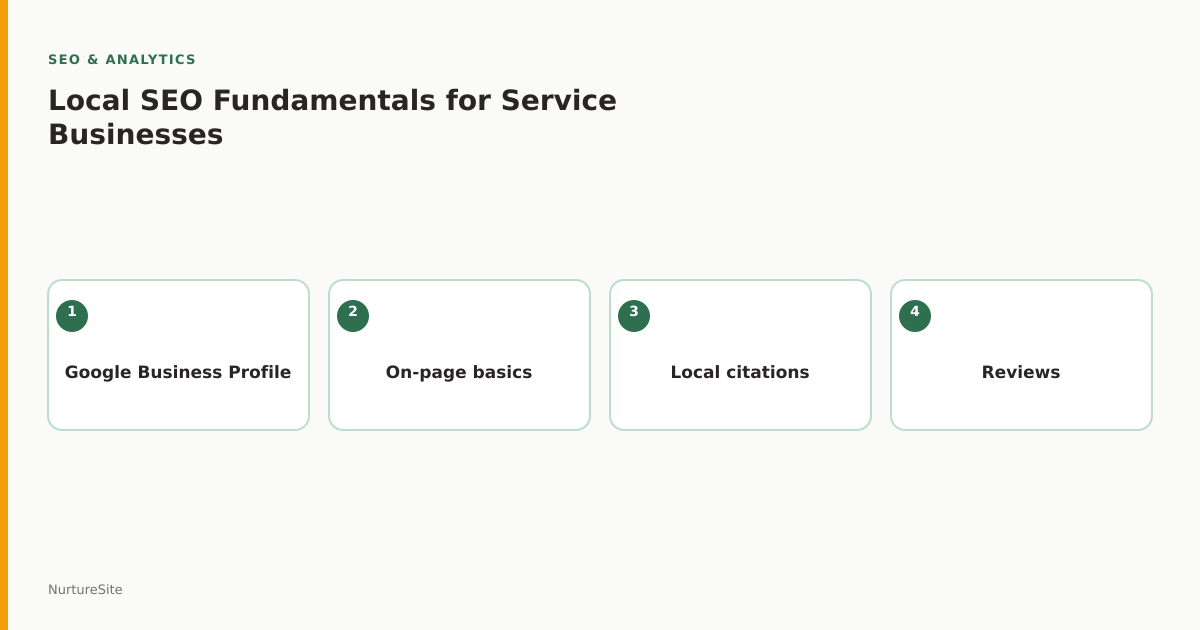
Local SEO Fundamentals for Service Businesses
Local SEO is critical for service businesses aiming to attract nearby customers. By optimizing your online presence, you can improve your visibility in local search results, ultimately driving more leads and bookings. Key aspects include understanding Google Business Profile (GBP), managing reviews, and ensuring your website is optimized for local searches.
Understanding Google Business Profile (GBP)
Your Google Business Profile is often the first impression potential customers have of your business. It’s essential to claim and optimize this profile. Ensure that your business name, address, phone number, and operating hours are accurate. Adding high-quality images and responding to reviews can significantly enhance your profile's effectiveness. According to a report by Google, 76% of people who search for something nearby visit a business within a day. This statistic underscores the importance of managing your online reputation actively. For more insights, refer to Google's Local Search Statistics.
Importance of Reviews and Ratings
Positive reviews not only build trust but also influence your local SEO rankings. Encourage satisfied customers to leave reviews on your GBP and other platforms. Responding to reviews, both positive and negative, shows potential customers that you value their feedback. This engagement can boost your local search rankings, as Google considers user interaction an important ranking factor. The Whitespark's Official Local Search Ranking Factors Report highlights the importance of reviews in local search visibility, emphasizing that businesses with more positive reviews rank higher in local search results.
Optimizing Your Website for Local Searches
Your website should reflect your local SEO efforts. Start by ensuring that your site is mobile-friendly, as many local searches are conducted on mobile devices. Include local keywords in your content, meta descriptions, and title tags. Create dedicated service area pages to target specific locations you serve. This approach not only helps with SEO but also provides valuable information to potential customers.
Utilizing Local Schema Markup
Implementing local schema markup on your website can enhance how search engines understand your business. This structured data helps search engines display rich snippets, which can improve click-through rates from search results. For detailed guidance on schema markup, refer to schema.org.
Google Search Console and Rankings
Google Search Console (GSC) is an invaluable tool for monitoring your website's performance in search results. It provides insights into how Google crawls and indexes your site, allowing you to identify and rectify issues that may hinder your rankings.
Monitoring Indexing and Crawl Issues
Using GSC, you can check for any indexing issues that might prevent your site from appearing in search results. The Index Coverage report highlights pages that are indexed and any errors that need addressing. Regularly reviewing this report ensures that your site remains accessible to potential customers. For more information on how GSC works, visit Crawling and Indexing — Google Search Central.
Submitting Sitemaps
Submitting a sitemap via GSC helps Google understand the structure of your website. This submission acts as a roadmap, guiding search engines to your important pages. While it doesn’t guarantee indexing, it significantly increases the chances of your pages being crawled. For best practices on sitemaps, check out the Sitemaps Overview.
Analyzing Performance Metrics
GSC also allows you to analyze performance metrics, such as clicks, impressions, and average position for your keywords. This data can guide your SEO strategy, helping you identify which keywords are driving traffic and which may need more optimization. By focusing on high-performing keywords, you can enhance your local search visibility.
Why NurtureSite for Local SEO
NurtureSite is designed specifically for local service businesses, providing an all-in-one solution that simplifies the process of building and optimizing your website. With our platform, you can create a professional website that integrates seamlessly with your Google Business Profile, ensuring your business is easily found online.
Our built-in lead capture forms and booking systems facilitate direct customer engagement, allowing you to manage inquiries and bookings from a single dashboard. Additionally, NurtureSite offers first-party analytics to help you track your website's performance and make data-driven decisions.
By choosing NurtureSite, you gain access to a comprehensive suite of tools that empower your business to thrive in the competitive local market. Our platform is user-friendly, making it easy for you to focus on what you do best—serving your customers.
Conclusion
In summary, mastering local SEO is essential for service businesses looking to increase visibility and drive bookings. By optimizing your Google Business Profile, managing reviews, and utilizing tools like Google Search Console, you can enhance your online presence. NurtureSite offers a robust solution to help you implement these strategies effectively.
Ready to elevate your local SEO game? Explore our pricing plans and start building your optimized website today!
Next Steps
A modern service business website should capture leads, explain your offers clearly, and stay easy to update without a developer. NurtureSite builds your core pages, blog, analytics, and consent tooling together so you can launch in about fifteen minutes and keep improving from one dashboard.
Further Reading:
Build Pages That Match How Customers Search
Service businesses win when each important job has a clear page: emergency vs install, residential vs commercial, or each major service line. Pair those pages with honest service-area copy, proof, and a simple next step. Avoid stuffing every topic onto the homepage. A focused page is easier to rank, easier to trust, and easier to convert into a call or booking.

AJ Herold, Founder
Alexander Herold is the founder of NurtureSite, where he builds website, CRM, and booking software for local service businesses. He writes about what actually turns search traffic into booked work.
More about AJ HeroldPrefer NurtureSite in Google Search
Add nurturesite.com as a preferred source so our articles can appear with a preferred badge in Google Top Stories and AI Mode.
Add as preferred sourceRelated articles
- How to Rank a Plumber in Google MapsWant to rank your plumbing business higher in Google Maps? Here's how to set up your profile, service pages, and lead tracking the right way.
- Mastering Local SEO: Essential Strategies for Service BusinessesDiscover essential local SEO strategies tailored for service businesses to enhance visibility and drive bookings. Start optimizing your local presence today!