
Leads & bookings
How to Collect Deposit When Customer Books Online: A Comprehensive Guide
Learn how to effectively collect deposits online using fixed or percentage options, and streamline your process with Stripe Connect.
By AJ Herold · July 19, 2026 · 5 min read
How this was written: drafted with AI assistance from NurtureSite's product documentation and Search Console data, then checked against the sources linked above and published under the editorial responsibility of AJ Herold. Spotted an error? Email sales@mg.nurturesite.com.
How to Collect Deposit When Customer Books Online
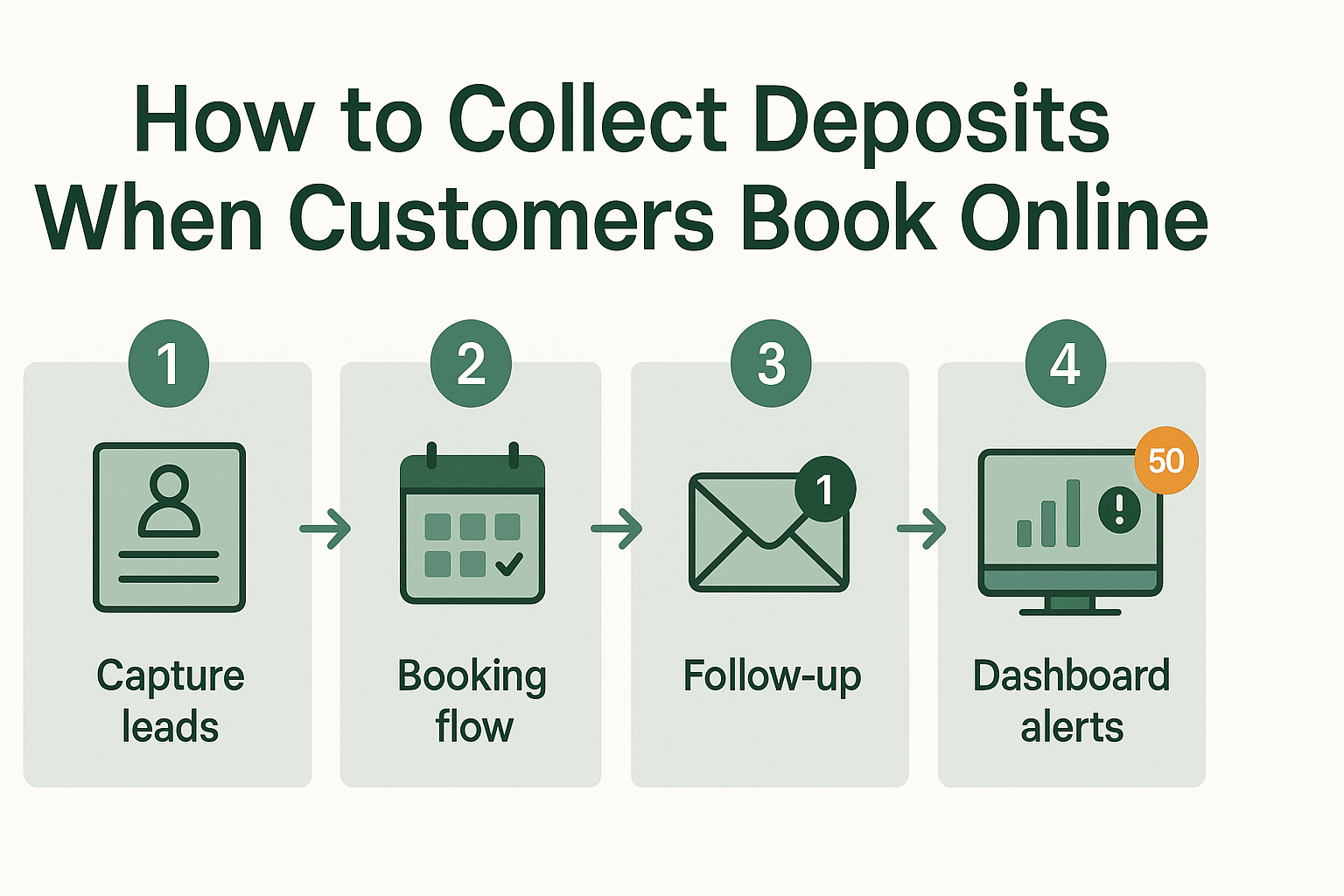
Collecting deposits is a crucial aspect of managing bookings for local service businesses. In this guide, we will help you understand how to effectively collect deposit when customer books online, including the differences between fixed and percentage deposits, and how to use tools like Stripe Connect to streamline the process.
Understanding Deposits: Fixed vs Percentage
When it comes to collecting deposits for services, local service businesses often face the decision between fixed and percentage deposits. Both methods have their pros and cons, and the choice largely depends on the type of service being offered.
Fixed Deposits
A fixed deposit is a set amount that customers pay upfront when booking a service. This approach is straightforward and easy for customers to understand. For instance, if you run a landscaping business, you might charge a fixed deposit of $50 for any service booked. This method is beneficial for services with a predictable cost structure, as it helps ensure that you cover your initial costs regardless of the total price of the service.
Percentage Deposits
On the other hand, percentage deposits involve charging a percentage of the total service cost as a deposit. This method can be more flexible and may appeal to customers who are booking higher-priced services. For example, if a customer books a $1,000 home renovation, a 20% deposit would amount to $200. This method can also help in managing cash flow, especially for larger projects, as it scales with the service cost.
Ultimately, the choice between fixed and percentage deposits should align with your business model and the expectations of your customers. Consider testing both methods to see which one resonates better with your clientele.
Utilizing Stripe Connect for Payouts
Once you’ve decided on your deposit structure, the next step is to implement a payment solution that facilitates easy transactions. Stripe Connect is an excellent option for local service businesses, allowing you to accept deposits seamlessly.
Setting Up Stripe Connect
To get started with Stripe Connect, you’ll need to create an account and integrate it into your booking system. This integration allows you to manage payments directly from your website, ensuring that deposits are collected efficiently.
With Stripe Connect, funds are transferred directly to your business account, which means you won’t have to worry about delayed payments or complicated payout processes. This feature is particularly beneficial for service providers who need immediate access to funds to cover upfront costs.
Benefits of Using Stripe Connect
- Instant Payouts: Stripe Connect allows for quick payouts, ensuring you have the cash flow needed to manage your business effectively.
- Secure Transactions: Stripe is known for its robust security measures, providing peace of mind for both you and your customers.
- Customizable Payment Options: You can set up various payment methods, making it easier for customers to pay their deposits.
For more detailed information on setting up Stripe Connect, check out our guide on Stripe Connect deposits.
Tracking Appointment Paid Conversions
Once you have your deposit system in place, it’s crucial to track conversions effectively. Understanding which deposits convert into actual appointments can help you refine your booking process and improve your overall business strategy.
Importance of Tracking Conversions
Tracking appointment paid conversions allows you to analyze customer behavior and identify trends. Are customers more likely to book when a fixed deposit is offered? Do percentage deposits lead to higher conversion rates for more expensive services? By answering these questions, you can make informed decisions about your deposit strategy.
Tools for Tracking
Using analytics tools integrated with your booking system can help you monitor these conversions. Look for solutions that provide insights into:
- Deposit Collection Rates: Measure how many customers pay deposits versus those who complete bookings without paying.
- Customer Feedback: Gather feedback on your deposit process to identify any friction points.
- Revenue Tracking: Monitor how deposits contribute to your overall revenue.
For a practical tool to help you calculate and manage deposits, consider using our booking deposit calculator.
Conclusion
Collecting deposit when customer books online is a vital strategy for local service businesses. By choosing the right deposit structure—whether fixed or percentage—you can ensure that your business remains financially healthy. Integrating Stripe Connect for seamless payouts and tracking appointment paid conversions will further enhance your booking process.
Ready to streamline your online booking and deposit collection? Explore our pricing plans today and discover how NurtureSite can help you manage your leads and bookings effectively!
Next Steps
A modern service business website should capture leads, explain your offers clearly, and stay easy to update without a developer. NurtureSite builds your core pages, blog, analytics, and consent tooling together so you can launch in about fifteen minutes and keep improving from one dashboard.
Further reading:
For official guidance, see Google Business Profile help.
Build pages that match how customers search
Service businesses win when each important job has a clear page: emergency vs install, residential vs commercial, or each major service line. Pair those pages with honest service-area copy, proof, and a simple next step. Avoid stuffing every topic onto the homepage. A focused page is easier to rank, easier to trust, and easier to convert into a call or booking.
Make Google Business Profile and your site agree
Keep your name, address, phone, categories, and hours consistent between Maps and your website. Use the same primary services in both places, and link profile actions to real pages that can capture the lead. Photos, reviews, and Q&A help, but the website still has to close the loop when someone clicks through.
Related reading
- How to Set Up Forms and Booking on Your Domain — Set up contact forms and online booking directly on your domain — so every lead lands in your NurtureSite dashboard inbox, not a third-party…
- Understanding Booking Deposit Percentages by Service Type — Learn how to set booking deposit percentages by service type, reduce no-shows, and collect deposits online with NurtureSite's built-in booki…
- Landscaping Website Quote Form Best Practices — Learn how to optimize your landscaping website quote forms for better leads.
- Optimizing Your HVAC Website for Emergency Repair vs Install Pages — HVAC websites need different pages, CTAs, and booking flows for emergency repairs vs planned installs. Here's how to set them up right.

AJ Herold, Founder
Alexander Herold is the founder of NurtureSite, where he builds website, CRM, and booking software for local service businesses. He writes about what actually turns search traffic into booked work.
More about AJ HeroldPrefer NurtureSite in Google Search
Add nurturesite.com as a preferred source so our articles can appear with a preferred badge in Google Top Stories and AI Mode.
Add as preferred sourceRelated articles
- Understanding Booking Deposit Percentages by Service TypeLearn how to set booking deposit percentages by service type, reduce no-shows, and collect deposits online with NurtureSite's built-in booking tools.
- How to Set Up Forms and Booking on Your DomainSet up contact forms and online booking directly on your domain — so every lead lands in your NurtureSite dashboard inbox, not a third-party app.
- Optimizing Your HVAC Website for Emergency Repair vs Install PagesHVAC websites need different pages, CTAs, and booking flows for emergency repairs vs planned installs. Here's how to set them up right.
- Landscaping Website Quote Form Best Practices for Effective Lead CaptureLearn how to optimize your landscaping website for effective quote capture with best practices for gallery blocks, project pages, and analytics.